Why Acupuncture Therapy is a Great Complement to Talk Therapy

The body and the mind are not separate systems. What we carry emotionally, we carry physically, and what we experience physically shapes how we think, feel and move through the world. Long before modern medicine had words for this connection, ancient healing traditions recognized it deeply, and built entire systems of medicine around the principle that lasting wellness depends on bringing both into balance. Acupuncture is part of one such system, and having been practiced and refined for over 3,000 years, it has stood the test of time as one of the most comprehensive approaches to healing the whole person. So what exactly is it, and how does it work?
What is Acupuncture?
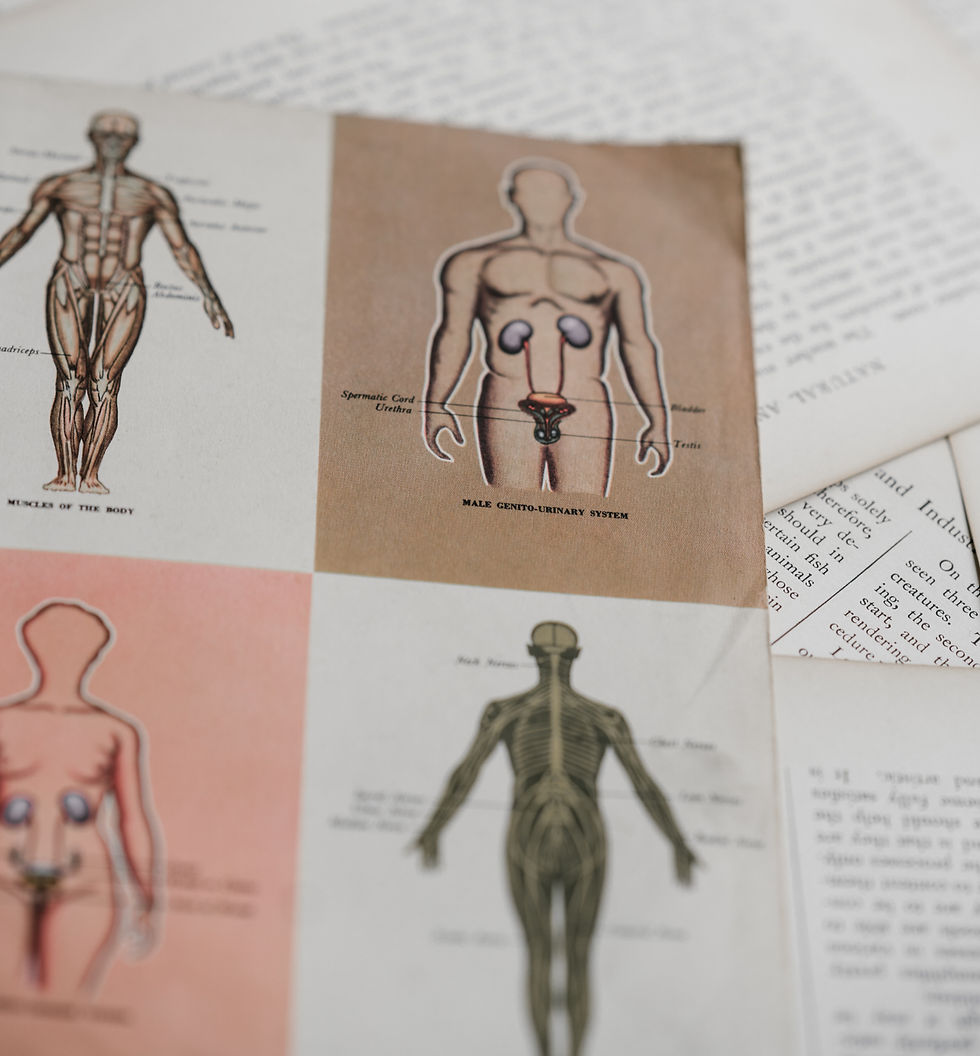
Acupuncture is a healing practice that has been refined over thousands of years within the tradition of Chinese Medicine. At its most fundamental level, acupuncture works with the body's vital life force energy, known in Chinese as qi (pronounced "chee"), which flows through a network of pathways in the body called meridians. When this energy flows freely and in balance, we experience health. When it becomes blocked, deficient, or excessive in certain areas, we experience dis-ease, whether that shows up as physical symptoms, emotional difficulty, or mental unrest.
For those with a more scientific lens, modern research has begun to validate what eastern medicine has always understood intuitively: the meridian pathways of the body correspond closely to the fascial network, a continuous web of connective tissue that has been shown to be piezoelectric, meaning it generates and conducts electrical charge in response to pressure and movement. Qi, in this light, may be understood as the bioelectric intelligence of the body itself.
Chinese Medicine is rooted in Daoist philosophy, which gives us the concept of Yin and Yang, and the principle of Oneness: the idea that the human being is a microcosm of the macrocosm. When we observe nature, we see that everything moves in cyclical balance. The sun rises and sets. The seasons change on schedule: flowers bloom in spring, leaves fall in autumn, and nature grows quiet in winter. This same rhythmic intelligence exists within us. In the modern western world however, we have become increasingly linear in our thinking and living, and many of us feel the cost of that disconnection in our bodies and minds.
Acupuncture is, in essence, a way of returning the body to its natural rhythm, bringing us back into harmony with the same cyclical intelligence that governs all of nature. In short, acupuncture is a tool within eastern medicine that aims to restore balance to the whole person, addressing the root of conditions rather than simply treating symptoms in isolation.
What to Expect in a Session

When you arrive for an acupuncture treatment, the first 10 to 15 minutes are spent on diagnosis through an eastern medicine lens. This includes pulse diagnosis, which is palpating six positions on the wrist that correspond to the major organ systems, tongue observation, and a brief intake interview. You might be asked: Do you tend to feel more hot or cold? How is your sleep? Do you feel rested in the morning? How is your digestion? This diagnostic process is entirely non-invasive and very comfortable.
After the intake, you will lie down on the massage table in a relaxed, supported position. The acupuncturist will gently insert acupuncture needles at specific points on the body to restore balance and harmony to your system. These needles are nothing like a shot or injection. They are closer in diameter to a strand of hair. You may notice a brief, mild sensation, but the vast majority of patients feel nothing at all. The process is comfortable and essentially pain free.
Once the points are activated, you simply rest for 30 to 45 minutes in a state of quiet stillness. Many patients fall asleep, which is entirely encouraged. Others meditate or simply drift with the music playing softly in the background. It is, above all, a deeply relaxing experience.
The Perfect Complement to Talk Therapy
Think of acupuncture as the yin to the yang of your talk therapy. Talk therapy is active: you are speaking, processing, engaging. It is yang in nature. Acupuncture is its natural counterpart. In an acupuncture session, you are yin: cultivating stillness, activating the parasympathetic nervous system, and receiving the benefits of eastern medicine therapy in a meditative state.
We all know we should meditate, but how many of us actually carve out the time to do it? When you schedule acupuncture alongside your talk therapy, you are giving yourself that time; and as a bonus, you are receiving a customized eastern medicine treatment for your body, mind, and spirit simultaneously.

Regardless of the source of your imbalances, whether physical symptoms such as pain, digestive issues, headaches or mental and emotional patterns like anxiety, worry, or depression, acupuncture works by restoring energetic balance and enhancing your resilience and capacity to adapt. Life's stressors may not disappear, but your ability to meet them with ease tends to grow.
For many patients, acupuncture becomes the missing piece- making the path to wholeness more complete, coherent, and aligned with the fundamental harmony that is already present within you. If this resonates with you, we invite you to speak with your therapist or call our office, at 919-791-5611 to schedule your first acupuncture session.


